

DC Pumps - 24V Electric Fuel Transfer pumps

Filter and sort


24V Diesel Transfer Pumps
If your truck, prime mover or heavy plant runs a 24 volt electrical system, a 24V diesel pump wires straight into it. No inverter, no voltage converter, no separate battery bank. Piusi 24V DC pumps are Italian built, self-priming and made for mobile fuel transfer where mains power is nowhere in sight.
The range covers 50 to 85 litres per minute, with battery kit options that are ready to wire and run. Genuine Piusi product, Australian warranty support, most items dispatched same or next business day.
Not sure whether your machine is 12V or 24V? Call 1300 987 789 and we will sort it out in two minutes.
How to tell if you need 24V
Get this wrong and you either burn out a pump or wonder why it will not start. Three quick checks:
- Count the batteries. Two 12V batteries wired in series is the classic 24V setup. Two batteries in parallel is still 12V.
- Read the alternator or battery label. The voltage is usually stamped on it.
- Know the machine type. Prime movers, rigid trucks, European and Japanese heavy vehicles, most excavators and larger ag tractors, and a lot of mining plant run 24V. Utes, light trucks and smaller tractors are almost always 12V.
Still unsure, put a multimeter across the battery terminals with the engine off. Around 12.6 volts means a 12V system. Around 25.2 volts means 24V.
Running a 12V pump on a 24V supply will destroy the motor, and it is not a warranty claim. If your machine turns out to be 12V, our 12V DC pumps cover that side.
The 24V range
| Model | Flow rate | Duty cycle | Best for |
|---|---|---|---|
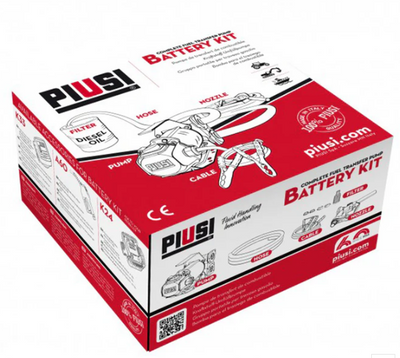
| BP 3000 24V Battery Kit | 50 lpm | 30 min on / 30 off | Ready-to-wire kit, general transfer |
| BiPump 24V | 85 lpm | 30 min on / 30 off | High volume truck and plant refuelling |
| BiPump 24V, 4m cable | 85 lpm | 30 min on / 30 off | Long battery-to-pump runs on trucks |
| BP 3000 dual voltage kit | 50 lpm | 30 min on / 30 off | Mixed 12V and 24V fleets |
| 24V oil transfer kit | 10 lpm | 30 min on / 30 off | Engine oil and lubricants, not fuel |
The dual voltage BP 3000 kit is worth a look if you run a mixed fleet. One pump that works across both systems means one spare on the shelf instead of two.
How long will it take to refuel?
| Flow rate | 200 L drum | 400 L tank | 1,000 L IBC | 2,200 L self-bunded tank |
|---|---|---|---|---|
| 50 lpm (BP 3000) | 4 min | 8 min | 20 min | 44 min |
| 85 lpm (BiPump) | 2 min | 5 min | 12 min | 26 min |
Allow another 10 to 20 per cent in the real world, because hose length, bore size, filters and nozzles all cost you flow. Note where the times pass 30 minutes: that exceeds the standard duty cycle, so a 2,200 litre transfer belongs on the BiPump, not the BP 3000.
Rule of thumb: choose a pump that finishes your largest regular job inside 20 minutes. That leaves room for restriction losses and keeps the motor well within its duty cycle.
Why 24V is easier to wire than 12V
This is the part most people miss. For the same power, a 24V motor draws half the current of a 12V motor. Half the current over the same distance means half the voltage drop, which means dramatically less copper.
It matters because truck installs involve long runs. A battery box behind the cab to a pump on the rear of a tray can easily be 6 to 8 metres, and at 12V that run needs serious cable. At 24V it does not.
Cable sizes below keep voltage drop within 3 per cent. Take the rated current draw from your model's datasheet and size for the full run, battery to pump and back:
| Pump draw | Run up to 3 m | Run up to 5 m | Run up to 8 m |
|---|---|---|---|
| 10 A | 2.5 mm² | 2.5 mm² | 4 mm² |
| 15 A | 2.5 mm² | 4 mm² | 6 mm² |
| 20 A | 4 mm² | 6 mm² | 10 mm² |
Compare that with the 12V range, where a 20 amp draw over 8 metres calls for 16 mm². If you have the choice, and your machine is already 24V, take it.
The rest still applies: fuse or circuit breaker within 300mm of the battery positive, negative run back to the battery rather than through a chassis earth, pump mounted close to and low against the tank, and a suction filter fitted from day one. Full detail in our DC fuel pump installation guide. For a permanent install on a registered vehicle, have a licensed auto electrician make the final connection.
What you get with a Piusi vane pump
- Self-priming rotary vane design. Smooth, consistent flow without a foot valve or manual priming, within the rated suction lift.
- Integrated bypass valve. When the nozzle closes, fuel recirculates inside the pump instead of building pressure against a dead head. This is what lets you walk away from a running pump with a closed nozzle without splitting a hose.
- 30 minute duty cycle. Thirty minutes on, thirty minutes off. Enough for almost any single refuelling job.
- Compact and serviceable. Mounts in a tray, toolbox, cabinet or tank top, and spares are available rather than being a throwaway unit.
Three setups that work on 24V
1. Truck-mounted onboard transfer
A diesel tank on the tray, refuelling plant and equipment on the road.
2. Heavy plant and earthmoving
Excavators, dozers and graders refuelled on site, with water contamination a real concern.
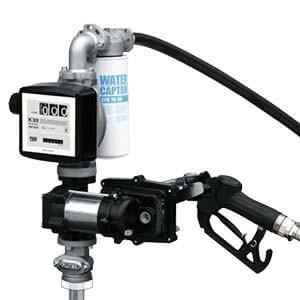
- BiPump 24V, 85 lpm
- A120 automatic nozzle with swivel
- Clear Captor water filter
- K44 flow meter
- Heavy duty hose reel, 25mm x 15m
3. Mixed fleet workshop
Some machines 12V, some 24V, one set of equipment.
- BP 3000 dual voltage battery kit
- Manual diesel nozzle
- 10 micron suction filter
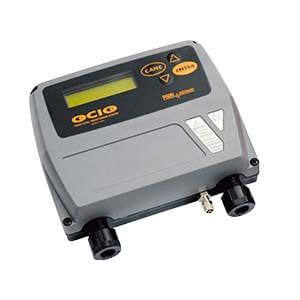
- OCIO tank gauge to track what is left in the tank
Where 24V pumps are used
Transport and linehaul. Onboard transfer tanks on prime movers and rigids, refuelling from the vehicle's own 24V system without touching the starting capacity.
Earthmoving and civil. Excavators, dozers and loaders refuelled where they sit, from a service truck or site tank. See our guide to pumps for construction and mine sites.
Agriculture. Larger tractors and harvesters that run 24V systems, refuelled straight from an IBC or self-bunded tank in the paddock. More in farm refuelling in Australia.
Mining and resources. Surface and underground plant, where fuel accountability and theft prevention matter as much as flow rate. See how to stop fuel theft on site.
Remote and off-grid. Generator top-ups, camp fuel and emergency transfers with no 240V anywhere. Our guide on battery versus mains powered pumps covers the trade-offs.
12V, 24V or 240V?
- 12V DC. Utes, light trucks, smaller tractors and portable setups. Browse 12V DC pumps.
- 24V DC. Trucks, heavy plant and machinery on 24V electrical systems. You are on the right page.
- 240V AC. Fixed installations with mains power: workshops, depots and bulk storage. Browse 240V AC pumps.
Our guides on 12V vs 24V and AC vs DC pumps go through it properly.
What else will you need?
- Nozzles, automatic or manual, for safe, spill-free dispensing
- Flow meters to record every litre dispensed
- Hose reels for a tidy, professional install
- Filters to keep debris and water out of the pump and the machine
- Tank gauges so you know what is left before you drive out
- Fuel management systems where you need user-level accountability
What kills a DC diesel pump
- Running it dry. Vanes rely on fuel for lubrication. A few minutes dry does more damage than a year of normal use.
- No suction filter. Grit off the bottom of a drum or tank scores the vanes and the pump body.
- Wrong voltage. A 12V pump on a 24V system is an instant write-off.
- Ignoring the duty cycle. Back to back refuelling on a 30 minute rated pump cooks the motor.
- Weather and water. An unprotected pump on an open tray collects water in the fuel and corrosion in the motor. A cabinet or cover pays for itself.
Why buy from PIUSI Shop
- Authorised Piusi distributor. Genuine product with Australian warranty support, not grey import.
- Backed by PETRO Industrial. Fuel equipment specialists supplying Australian industry.
- In stock, ready to ship. Most products dispatched same or next business day.
- Spares and service. Filters, elements, nozzles and meters for the pumps we sell, not just the initial sale.
- Expert support. Call 1300 987 789 and speak to someone who has actually installed these pumps.
Talk to our team or send a trade enquiry.
24V diesel pump FAQs
How do I know if my vehicle is 12V or 24V?
Two 12V batteries wired in series indicates a 24V system, while two in parallel is still 12V. The simplest check is a multimeter across the battery terminals with the engine off: roughly 12.6 volts means 12V, roughly 25.2 volts means 24V. Prime movers, heavy trucks, most excavators and larger tractors are typically 24V.
Can I run a 24V pump on a 12V system?
It will not work properly. A 24V motor on 12V will either not start or will run slowly and draw heavily, which damages the motor. Use a 12V DC pump on a 12V system, or the dual voltage BP 3000 kit if you run both.
Can I run a 12V pump off my 24V truck with a converter?
Technically possible, but not worth it. A converter rated for a pump's surge current costs more than buying the correct 24V pump, adds a failure point, and voids nothing except your patience when it drops out mid-transfer. Buy the right voltage.
What flow rate do I need?
For drums and smaller tanks, 50 lpm is enough. For plant refuelling, multiple machines a day, or tanks above about 1,000 litres, go to 85 lpm and match the hose bore to suit. See high flow vs standard pumps.
What is a duty cycle?
Duty cycle is how long the pump can run before it needs to cool. Piusi 24V pumps are rated 30 minutes on, 30 minutes off. If you refuel back to back, size up on flow rate so each job finishes sooner.
What does the bypass valve do?
When the nozzle is closed while the pump is still running, the bypass valve recirculates fuel inside the pump rather than letting pressure build against a closed line. It protects the pump, the hose and the fittings.
Will it drain my truck battery?
For normal transfer sessions on a healthy 24V system, no. For long sessions with the engine off, or where the pump serves a standalone tank or trailer, run it off a dedicated auxiliary battery rather than the starting batteries.
Do these pumps come with a nozzle and hose?
Battery kits include the cable and clamps needed to connect to the battery. Nozzles, hose, meters and filters are specified to suit the job and can be added from our nozzles, hose reels and flow meters ranges. Check each product page for exactly what is included.
Can I pump AdBlue or oil with these?
No. AdBlue needs a dedicated pump with compatible seals and stainless components, and oil needs a viscous fluid pump. Browse AdBlue pumps and oil and lubricant pumps. Cross-contamination ruins both the pump and the equipment downstream.
Is there a warranty on Piusi pumps?
Yes. All Piusi products sold through PIUSI Shop carry manufacturer's warranty with Australian support. Contact our team for terms specific to your model.
Featured Products